Showing posts with label fat. Show all posts

Friday, February 25, 2011

Instead Foods

A couple of years ago my sister was going through a phase where she only wanted to eat hot wings. OK, so that phase has lasted up until the present (we've gone to Fire On the Mountain, THE place to get wings in Portland, OR twice in the last five weeks), but it kind of used to be worse. When she was trying to loose weight her friend suggested she make "hot wing salads" of baked chicken breasts over lettuce with hot sauce and blue cheese dressing.

This is an example of what I call an instead food - instead of eating the thing that is really not good for you, you eat something that kind of fills that craving you are having. Unfortunately, like the hot wing salads, most instead foods just aren't quite the real thing.

I have recently been in need of an instead food for my ice cream addiction. Firstly, no one needs to be eating ice cream at the rate I can put the stuff away. Sweet, creamy and chocolate are my three favorite things and there's a grocery store in my neighborhood that sells Hagen Dazs at less than 3 dollars a pint. Secondly, I am coming to the realization that with my third decade of life is coming less and less tolerance for conventional dairy products. Especially fatty and sweet dairy products. Sadness.

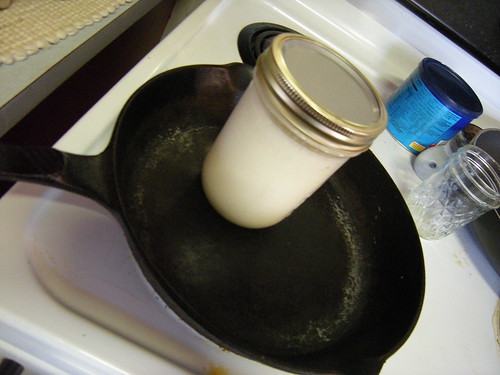
So I began the hunt for my chocolate ice cream instead food. Coconut milk is a wonderful substitute for creamy and sweet so I looked into coconut milk ice creams. There is one good quality, all natural brand here in Oregon called Luna and Larry's Coconut Bliss that really is blissful but at 7 dollars a pint or more that is just not gonna cut it. So Delicious makes a coconut milk ice cream that is more reasonably priced, but is full of guar gums and "natural flavors". I was lamenting this situation on Facebook when a friend of a friend said that she makes ice cream in her freezer without an ice cream maker. I immediately turned to google to see if this miracle could be true. Sure enough, David Lebowitz has a recipe for ice cream made in a shallow pan that you stir up every 45 minutes or so. I combined his method with The Nourishing Gourmet's recipe and ended up with an amazing product. Who knew it could be so easy?!?


I wondered what else I could accomplish with this amazing coconut milk and chocolate combination and my mind immediately turned to pudding. I didn't grow up eating pudding but have come to appreciate it's creamy texture and the fact that it comes in truly single serving size containers. I this recipe from vanilla & lace and was very pleased with the flavor and set of the pudding. For the ice cream I had used a canned coconut cream but for the pudding I used So Delicious brand coconut milk. It comes in a tetrapack, is much lower in fat and more like cows milk in consistency. It doesn't give the same really creamy texture as the coconut cream, but the cornstarch does a fine job of creating the pudding texture that fools you into thinking its really fatty and creamy. I poured the hot pudding into 1/2 cup sized tupperware containers and had my own pudding packs in the fridge.

The main problem with my first batch of pudding was the lumps of cornstarch that come from adding the cornstarch to the hot chocolate milk. For my second batch of pudding I used Martha Stewart's recipe that has you whisk small amounts of milk into the cornstarch at the very beginning of the process to form a paste, then add the rest of the milk. I also added a little cinnamon to the pudding for a refined, adult flavor and again poured it into small plastic containers for individual servings. The recipe was 100% successful and definitely a dessert worthy of eating alone in front of a rerun of Sex in the City or serving at the end of a dinner party.

Photos by stu_spivak and llsimon53. Please click on their names or photos and see what else they've been cooking up!

Monday, November 8, 2010

Saturday Baking

Doesn't it seem like as soon as the weather turns cooler you just want to turn the oven on? Well, the weather started changing around here around the middle of October and sure enough I spent two Saturdays in a row baking lovely things for breakfast and sharing. The warm sweet aromas coming out of the oven and the occasional burst of bright sunshine through the orange and red leaves makes fall a not so bad time of year after all.

Making sweets or baked goods while following a traditional foods lifestyle can be challenging for a couple of reasons. Evidence is stacking up from all sides that sugar and simple carbohydrates in refined flour are just not good for you. Sally Fallon recommends the use of rapadura, an unrefined cane sugar, instead of refined white sugar or adapting a recipe to use honey or maple syrup. These sweetners, while still very high in sucrose and fructose that can wreck havoc on all but the very most stable blood sugar levels, do contain some of the trace nutrients of the original plant material. Traditional wisdom reminds us that tempering our sweets with adequate fats can help regulate our blood sugar so I always try to include nutritious ingredients and a full compliment of butter, eggs or coconut oil.

The other problem with baking is the problem of grains. Sally Fallon teaches us that though whole grains are more nutritious than refined grains, they need to be processed properly in order to neutralize anti-nutrients and release their full potential. The usual methods for neutralizing phytates are soaking in an acidic medium, sprouting or fermenting using sourdough methods. I won't even get into gluten free baking, oy! Sprouted flour can be used in any recipe that calls for wheat flour with minimal or no changes to the process. Soaking and fermenting require completely different processes and honestly, are a bit outside my range of motion on a typical Saturday morning. I take comfort in the knowledge that white flour, though not adding much nutrition, is not removing vital minerals through the action of phytic acid. My baked goods are treats, not staples in my diet, and so I don't worry too much.

This recipe, though, circumvents most of these problems by being grain free and refined sugar free. It is based on a recipe in the great cookbook White Trash Cooking by Ernest Matt Mickler, a lovely collection of authentic recipes reminiscent of the author's childhood in rural Mississippi. The original is called Sweet Potato Pone and is a mix of baked sweet potatoes, heavy cream, molasses and eggs baked into a sweet treat. I subsituted the sweet potato for canned pumpkin and the heavy cream for coconut milk to make a healthful, easy baked treat for any Saturday morning.

Pumpkin Molasses Custard (or Pone, if you prefer)

1 can canned pumpkin (or 2 cups mashed cooked pumpkin, winter sqash or sweet potato)
1/2 can coconut milk (or 1 cup heavy cream or evaporated milk)
3 eggs (or 2, if that's all you got)
1/2 cup molasses (give or take - a big hearty glugg out of the jar will do)
spices to taste - I used 2 tsp cinnamon. Nutmeg, ginger or cloves are not out of place here.
1/2 tsp salt

Combine everything in a mixing bowl and then pour into a greased 8x8 baking dish. Bake at 350 degrees for 40 to 50 minutes or until set and browned to your liking. It really can be eaten anywhere from still a little jiggly to brown and firm so take it out whenever you just can't stand it anymore.

Serve with whipped cream, cold heavy cream, chopped nuts or just a spoon. It's very rich but very tasty.

What do you like to bake up on these cool, rainy, autumn mornings?

Tuesday, January 19, 2010

How to Dress a Salad

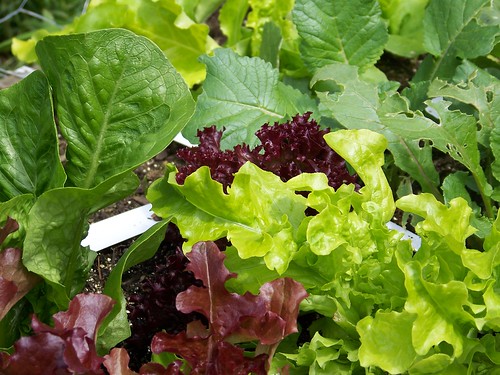
When people are switching over to a more traditional or healthful diet the how-to of salad dressing almost always comes up. Commerical salad dressing is usually a nasty brew of polyunsaturated oils, high fructose corn syrup, artificial flavors, gums and starches. For some people switching to a healthier diet they are the first thing to get tossed out of the fridge. For others they can be the last. Healthy, homemade salad dressing SHOULD be easy, right? It's just oil, vinegar and seasonigns, what can be so hard? I can hear the healthfood wanna be's laughing now.

I had the hardest time with salad dressing until just recently. It was always too oily, or too vinegary, or too salty, or not salty enough. Then I discovered an old cookbook, snitched from a public library untold years ago, in my mom's basement. The Savory Way, by Deborah Madison, one of the leaders of the Berkeley health food movement in the 1960s and 70s. The book is vegetarian and elegant, but homely too. These are the kinds of foods someone who has spent years perfecting their sense of flavors and textures makes at the end of a cocktail party, or for her own Sunday afternoon supper. Flipping through the book makes me long to live next door to her, to have the luxury of dropping in for a bowl of this or a nibble of that. Generally simple, but perfectly composed, her salads are a highlight of the book.

In one of the salad dressing recipes she mentioned her trick to perfect sald dressings - a simple ratio. She uses a ratio of 3:2, oil to acid for all of her dressings with adjustments in ingredients and additions, but not that base ratio. Three to two is almost identical to 5:3 but using that ratio allows you to mix and match your oils and acids in even more variations. A ratio also allows you to make various quantities ranging from a quarter cup of dressing for dinner for two to a quart of dressing to keep in the fridge to have on hand. Simply adjust your measuring tool. I often use tablespoons or teaspoons when making dressing for one or two, but quarter cups would make a family sized batch.

A few words about ingredients before I get into some recipes. One of the reasons we are ditching the commercial salad dressings (aside from cost - they are expensive compared to homemade!) is the polyunsaturated fats. In my post on fats I linked to a couple of articles about the health impacts of polyunsaturated fats - as in, they are really bad for you and you should work towards eliminating them completely - and also talked about the cooking fats I do use in my house. Most healthy fats are solid at room temperature, though, making them unsuitable for salad dresssings.

Olive oil is the classic choice for salad dressings. It is high in monounsaturated fat, a fat that has real health benefits, and low in polyunsaturated fats. Use caution when buying and storing olive oil, though, many olive oils are adulterated with cheaper vegetable oils, and the monounsaturated fatty acids are fragile and thus go rancid more quickly than animal fats. Buy from a reputable source and keep the oil in a cool, dark place.

Sometimes you just don't want your salad to taste like olive oil, though. Sometimes you are going for an asian flavor, or your kids balk at the olivey flavor. Check with your olive oil source and see if they have a light or second pressing oil with a more neutral flavor. You can also use some nut or seed oils (sunflower, sesame, walnut, almond, etc) for salad dressing as well. High oleic sunflower oil is a particularly good choice because it is high in monounsaturated fat and low in polyunsaturated, but it is hard to find. When buying nut or seed oils be sure to read the labels carefully for the levels of polyunsaturated, monounsaturated and saturated fats in the oil. Ideally, you want something with low poly- and higher mono- and saturated. In any case, remember that these seed and nut oils are fragile foods that should be used in strict moderation. Buy small bottles, keep them cool and dark, and don't use them for much of anything except salad dressing. Keep cooking with your good, healthy animal fats.

Here is an example of a simple dressing and a few variations using Deborah Madison's magic ratio. I will use tablespoons for all my measurements because I usually make just enough for one or two meals, but feel free to scale up if you are feeding a crowd.

*** *** ***

Simple Italian Dressing

  • 3 tbs olive oil
  • 2 tbs red wine vinegar
  • 1/2 tsp dijon mustard
  • 1 small garlic clove, pressed
  • goodly pinch of salt and grind of pepper

In a small jar with a lid combine the vinegar, mustard, garlic, salt and pepper. Stir with a fork until well combined. Add the oil, screw on the lid and shake until well incorporated. Taste, on a leaf of lettuce, and adjust salt or vinegar as necessary.

Asian Dressing

3 tbs high oleic sunflower oil or un-toasted sesame oil
1 tbs rice wine vinegar
1 tbs lime juice
1 tsp grated ginger
1/2 tsp grated or pressed garlic
1/2 tsp soy or fish sauce
a few grinds of black pepper
chile flakes, to taste

Combine everything but the oil in a small jar with a lid. Stir to combine and then add the oil. Screw on the lid, shake to combine then taste and adjust as necessary.

Fruity Vinaigrette

1 tbs extra virgin olive oil
2 tbs light olive oil or high oleic sunflower oil
1 tbs fruit infused cider vinegar (raspberry, blueberry, cherry, plum, etc)
1 tbs red wine vinegar
1/2 tsp honey, or to taste
a pinch of garlic powder
a very generous amount of black pepper
salt

Combine everything but the oil in a small jar with a lid and stir well to combine, getting the honey really incorporated into the vinegar. Add the oil, put the lid on, shake to combine and adjust seasoning.

Balsamic Roasted Garlic Dressing

3 tbs olive oil
1 tbs balsamic vinegar
1 tbs white wine vinegar
2 or 3 cloves roasted garlic
1/2 tsp dijon mustard
salt and pepper to taste

Mash the roasted garlic with the mustard and the salt and pepper. Stir in the vinegar until it is well combined then shake it up with the oil.
*** *** ***
The variations here are endless. Add herb, fruit or spice infused vinegars or oils, different fresh or dried herbs, different sweetners or spices. Sometimes I like to use the brine from my home pickled vegetables. Pickled beets make a particularly beautiful and tasty salad dressing. You can stir in grated parmesan, crumbled feta or blue cheese, yogurt or sour cream. The sky is the limit here.

What is your favorite salad dressing? What is your favorite salad recipe? Have you suceeded in copy catting a favorite commercial dressing? Who do you buy your olive oil from?

This post is a part of Real Food Wednesday. Check it out for more real food recipes and stories!

Friday, July 24, 2009

Roly Poly, Daddy's Little Fatty

I never bought into the whole low fat diet thing. My parents didn't buy into it and it just never made any sense. Why would you want to eat margarine, which comes from a factory, rather than butter, which comes from a cow? Why eat sugar and preservative laden low-fat cookies when you could just eat real cookies in moderation? When I read Sally Fallon's Nourishing Traditions I finally had some words and some ideas to back up my vague feelings that a low fat diet was inappropriate. Fat isn't evil... in fact, fat is necessary for health and hapiness!

Traditional cultures have always prized fat because it is calorie dense and nutrient dense. From early American and European pig lard to SE Asian coconut oil to Inuit seal blubber fat has been the most sought after and important food stuff around the world. There's a Nature episode where Julia Roberts visits the nomadic people of Mongolia and learns about their culture. My favorite part of the show is how in one frame she is commenting on how gross the traditional butter tea is and in the next wondering how they survive such bitter cold temperatures. It didn't occur to her than the one is directly related to the other.

But in modern America something went wrong and has drastically changed how we view fat. In the middle of the 20th century a number of researchers promoted substituting unsaturated vegetable oils for traditional saturated animal fats and lowering dietary fat intake in general in order to reduce coronary heart disease. One of the best known of these researchers was Ancel Keys who published what became known as the Seven Countries Study which corrolated the lower fat diets of Post World War II Europe and Japan with that of affluent post war United States. Keys' statistical strong association weakens when other countries are added to the Seven, and almost fall apart completely when one takes into account that the Italians and French he studied had a long tradition of animal fats that had simply been put on hold by the devastation of decades of war.

In his New York Times piece What If it's All Been a Big Fat Lie Gary Taubes goes over the science and pseudoscience behind low fat and low carbohydrate diets (his research point to pro low carb and anti low fat diets). He lays out a very convincing story that a combination of imperfect human researchers and impossibly complicated human bodies have led us down a path towards obesity and disease. There is also more and more evidence that our modern diet is excessively high in polyunsaturated fats which are not a part of traditional diets. Polyunsaturated fat in the form of vegetable oil is cheap to produce and with the advances in chemically separating the oil from plant seeds, removing toxic chemicals and deodorizing the oils it has become a staple in every American home, restaurant and food processing plant.

Low fat, high fat? Unsaturated, mono-, poly-, just plain saturated fat? Omegas and LDLs and all that... what's a girl to do? Look to the past, that's what I always say. What would people use for cooking fat if they didn't have mono-cropped soy beans and giant food processing factories?

Using this criteria I have put together a fat primer for you. I present it to you with the reminder that we all do the best we can with what we have. I eat out sometimes, I eat at people's houses sometimes and sometimes I even get a pack of chips out of a vending machine. I am not a whole food Nazi, but when I can I prefer to use the most healthful, traditional cooking fats. Here's what I do in my kitchen... on my best days.

******

Fats for Cooking by Type of Fat

Unrefined coconut oil: This is the work horse of my cooking fats. It is almost flavorless and can be used at pretty high temperatures so I use it anywhere you would use "vegetable oil". It is solid when the weather is cool and liquid when room temps are above about 70F but since it comes in a wide mouth jar I just use a spoon to get it out. It's a little spendy to use for deep frying, but it would be good any other time you are cooking with fat. I usually buy Omega Nutrition brand but that's just because it's available at a good price at my local health food store.

Virgin coconut oil: I treat this as a special fat with amazing antimicrobial properties in addition to lots of medium chain fatty acids and a fantastic smell. It is pretty expensive and cooking might destroy the beneficial properties so I cook with it when I am doing something where coconut would be appreciated, like Thai curry. I melt it for use in baked goods occasionally when the flavor would be appreciated and use it along with butter on my popcorn. And sometimes I make coconut bark. Yuummm. I also use it for a number of body care products like skin cream (coconut oil and jojoba oil with a little scent) and deodorant (coconut oil and baking soda with scent). I buy pint jars at my health food store, but lots of people like Wilderness Family Naturals for 5 gallon buckets.

Butter: Mmm... butter. In addition to slathering this on bread and pouring it over popcorn I do cook with this occasionally. I use it, often mixed with coconut oil, when pan sauteing veggies or frying eggs. Butter does have some amount of water and protein in it so it will burn, but I don't have major problems with that. Ghee or clarified butter is an all purpose cooking fat in French and Indian cooking and can easily be bought or made at home. Raw, pasture raised butter is best but even regular store butter is better than margarine or vegetable oil. Look for imported butter like Kerrygold from Ireland or Anchor from New Zealand. Organic Pastures has a "pastured" butter and most stores sell organic butter these days.

Rendered animal fat: I am still working my way through the 3 pints of goose grease I rendered when I cooked a goose last winter. It's pure white, about butter consistency and has a slight poultry flavor. I enjoy cooking with this anywhere it's flavor would be appreciated or tolerated. I've also used chicken fat and would gladly use lard or tallow if I had it available. Each of these will have different flavors and smoke points but all would be good for general cooking (sauteing veggies, frying onions, browning meat, etc). A note on rendered animal fats.. these are not fats you can buy at any old grocery store.

Do NOT buy lard from a regular grocery store. The stuff they sell there is usually adulterated with hydrogenated lard and preservatives. It is not much better for you than crisco. These are fats you need to produce at home or buy from a specialty dealer/farmer. Of course, these fats are best from pastured, organic,happy animals but even grocery store chickens will make fat that is better than hydrogenated lard. You can save scraps from the meat you eat, skim fat from stock making or see if you can buy un-rendered fat from a butcher or farmer. Google around for instructions on rendering it yourself. It's not hard and the rendered fat will keep in jars in the fridge or freezer for a very long time.

Bacon grease: I collect bacon grease and keep it in a mason jar next to the stove. I use it for cooking anything a bacony flavor would be appreciate - which is lots of things. It's the best for starting soups or frying eggs. Mmm...bacon grease. And someday I'll get it together and make that bacon grease mayo recipe that's been floating around....

Olive Oil: Olive oil one of the few traditional liquid oils and is the classic oil for mayonnaise and flavored dipping oils. Buy the best quality you can afford because olive oil is subject to going rancid if not stored properly, and is probably much more adulterated than we would like to think about. It really shouldn't be cooked with. I do, sometimes for flavor, but rarely. Olive oil is much better for you when used in salad dressings or other raw applications because the monounsaturated fats are much more delicate than saturated fats. Extra virgin is the most flavorful, but feel free to use not-extra-virgin as long as you are using oil from a reputable producer.

High oleic sunflower oil: I just found this in the store, finally! It is a high monounsaturated fat oil that should be as healthful as olive oil, but with a different (less olivey perhaps?) flavor. I haven't opened the bottle yet so I can't tell you what it's like but I would use this anywhere I would use olive oil. It would be especially nice for mayo or other salad dressings where you don't necessarily want the olive oil flavor.

Spectrum palm shortening
: I bought this years ago and found it tasted horrible.It is made of deodorized palm oil and is low in polyunsaturated fats, so should be an acceptable fat. Probably a compromise fat because of how processed it is, but low in bad fats anyway. They say it can be used anywhere regular shortening would be used but the pie crust I made with it tasted like soap. Anytime I've used it for cooking I've also gotten a gross soapy flavor. I used it to season my cast iron pans last winter, and sometimes throw a glob in a wiped out cast iron skillet to grease it up and protect it. I might try it on a BBQ sometime. too.

Sunflower, safflower, sesame oil: I have bought these oils in small bottles to make salad dressings with. They are all higher in polyunsaturated fats than we would like to be consuming (especially since I probably still get a fair amount of poly unsaturated fats from factory farmed meat, eating out, eating at friend's houses and occasional packaged foods), but sometimes you have four heads of lettuce in the fridge and really don't want an all olive oil salad dressing. Now that I found the high oleic sunflower oil I won't buy these guys anymore. When looking at bottles in the oil isle at the health food store look for oils with the lowest polyunsaturated fat level and the highest monounsaturated fat level.

Red Palm Oil: I've never used this but I hear it's pretty neat. It's solid like coconut oil and deep red in color. The color indicates a high level of carotene vitamins and the saturated fats keep it stable at high temperatures.

Canola oil: This stuff really is gross and the devil in so many ways. My roommate has a bottle of it that I moved to under the sink and he hasn't missed it because he hasn't cooked in months. I busted it out when I grilled the other weekend just because I wanted to have fun and it was easy. I drank a Budweiser that night too. So sue me! :)

******

Cooking Fats by Type of Cooking

Pan frying/sauteing: expeller pressed coconut oil, virgin coconut oil, butter,bacon grease, rendered animal fat, olive oil. Depends on the flavor. Be careful with butter at high temps.

Baking: butter, virgin coconut oil or expeller pressed coconut oil. Depends on the flavor, and how the fat is used. I would use either, along with parchment paper, for "greasing" the pan.

Deep frying: you would want to use rendered animal fat like lard or tallow there. These fats have the highest smoke point so are able to get good and hot to fry the food without letting it get greasy.

Seasoning cast iron skillets: Lard if you have it, palm shortening or crisco. I believe that a long baking in the oven would polymerize the fat and turn it into a coating rather than a fat that gets into your food so this would be a way to use up that jar of crisco you still have. I use palm shortening or coconut oil to grease up a pan between uses if I am not going to actually bake the fat on.

BBQs or Grilling: Well... yeah, about that. I still use canola oil for this. Expeller pressed coconut oil should be fine because of it's high smoke point, but it's awfully expensive for swabbing all over a grill top. I might try the palm shortening next time. I think ideally you would have a slab of un-rendered pork fat to rub all over the grill :)

******

There is lots of good information out there about which fats to use and why. Check out all the links I used in this post and then check out the following resources:

*Weston A. Price Foundations Know Your Fats Index

*Cheeseslave's and Kelly the Kitchen Kop's Posts on Fat

*Nina Planck's Real Food book

*Bryan's Blog Stay Healthy, Enjoy Life. Specifically his post about fats.

Fat is a prized food for a reason. It is full of vitamins, energy giving calories and protective molecules. Remember, every cell in your body is encased in saturated fat and your brain is mostly saturated fat. The hormones that make you happy and sexy are made of saturated fat. Don't sell yourself short by going low fat or eating unhealthy, non-traditional fats.

Be sure to check out Real Food Wednesday for more posts from folks who aren't afraid of fat!! Also, be sure to click on all the photos I used to see more from my amazing, not fat-a-phobe, Flickr friends!

What fats do you cook with at home? What's your favorite way to get more fat into your diet? Whats the best butter you've ever tasted?