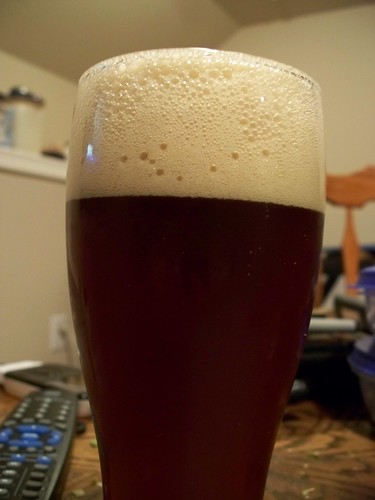
This summer I have been putting the skills I learned at the Brewmeister's side to use in making my own beer and wine. Brewing alcholic beverages has an acient history and some say it might even have been the ultimate factor in humans deciding to stop wandering and set down roots and build a civilization. The theory is that people grew grains not to make bread but to make beer, and once you are making beer you need storehouses for the grain and the beer... plus pubs to drink it all in. Until the 1516 Reinheitsgebot, the German beer purity law, was enacted (and even well after it in many places) beer was brewed with a wide variety of grains and herbs, often by women in their own homes. On it's surface the Reinheitsgebot, which restricts beer ingredients to malted barley, water and hops (plus yeast, but that wasn't identified as a crucial ingredient until the 19th century) is a trade protection law to reduce competition with both local bakers and brewers in other regions. Digging a little deeper it probably also had anti-pagan, anti-"drug" and anti-women motives as well. Many of the old style beers were made with herbs that were psychotropic and used in ancient cermonies that predate the puritanical Christianity that was gaining popularity at the time. Hops, a common but not at the time universal bittering and preserving agent in beers, are actually a depressant and anaphrodisiac. People who drink hopped beer don't generally have the energy for all night frolicking like those who drank the ancient gruit ale. No matter the reasons behind the Reinheitsgebot the results were clear - a Teutonic culture of pure beer, made in factories by men using chemicals and precise measurements. This is how the Brewmeister tended to brew.
Being a disciple of Sandor Katz and uncounted generations of alewives brewing in their kitchens I have adopted a much more free flowing style. All of my experience making fermented vegetables had led to me have faith in the microbes. If you give them a reasonable place to set up shop, they will! My first beers were literally "a little of this, a little of that, throw in some yeast". Honestly, that first beer is quite drinkable. I did actually cave and buy a kitchen scale after the first brew day and my second beer is much better.
My first two beers are fir tip beers brewed with both hops and the young tips of Douglas Fir trees. Doug Firs are the state tree of Oregon and insanely common where I live. I collected the tips in March and April from trees growing my parents' yard and my everyday dog walk park. They have imparted a lovely acidic and tannic flavor to what would otherwise be a rather boring amber ale. Here is my recipe and instructions. These may look complicated but they are not. In fact, brewing can be a lifetime pursuit and there is always more to learn. But the first step is just brewing some.
The ingredients to make beer are neither expensive nor exotic. If there is a home brewing supply store in your town you are all set and if you don't I'm sure everything can be found online for a reasonable price. Right now I am making beer using malt extract which is basically a molasses or syrup made from malt sugar. The more advanced method o

f making beer involves extracting the sugar out of malted barley yourself. This involves considerably more equipment and skill but yields a much more complex beer. Malt extract is avaliable in many colors at home brew supply stores or over the internet. Hops are the other main ingredient in beer and both they and brewing yeast are also easily found at brewing supply stores. The variety of hop is not too important in this beer (some hops have lots of bitterness and little aroma, others the other way around) so get something middle of the road if the brewing supply folks ask what you need. I used an American ale yeast, but again it's not terribly important. Anything that isn't a specialty yeast will work just fine.
I will list out both the hardware and the software you need but you can certainly get away with less or load up on more, especially in the hardware department! I will give instructions for a one gallon batch as opposed to the more common five gallon batch because I think it is easier to start small. As soon as you get the hang of it, scale up. I highly recommend reading all the recipes, forums and books you can get your hands on (I highly, highly recommend Sandor Katz's Wild Fermentation) and then just give it a try. Remember, the yeast will make alcohol, all you are doing is setting the table for them.
****
Broderick Cellars Fir Tip Ale
Step One: Brew Day
Hardware:
*Cooking pot with a lid
*Stainless steel long handled spoon
*Cheese cloth or other mesh "hop bags" or a strainer
*Kitchen scale or other device to weigh a couple ounces of plant material
*A second pot or 1/2 gallon glass jar
*A small glass jar, coffee mug or pot
*Timer
*Funnel and strainer
*1 gallon glass jug - this is called a carboy or fermenter
*Air lock and stopper
*A stove or other device to heat water to boiling and keep it there, as well as running cold water, *A tub of ice water or some other way to cool a volume of liquid relatively quickly.
Software:
*Pale or amber malt extract - 1 pint (it is usually sold in 7 or 14 pound tubs. It stores forever so don't worry about buying too much)
*Hops - 20 g of whole hops (Any variety that is not a specialty bittering or aroma hop)
*Fir tips - 40g (Be sure to collect only the young, soft, light green tips. They have a lovely

citrusy, christmas tree smell but less tannin and bitterness than the older, dark green tips. The young tips of any edible conifer would do. Spruce is traditional but many pines are edible too)
*1 packet of dry ale yeast (Don't let them talk you into "pitchable yeast". Since you are making a 1 gallon batch you want to be able to use less than a whole packet. Any American or non-specialty yeast will do)
*Good drinking water. People always claim that their water is the reason their beer or wine is so good. If your tap water is icky, buy bottled water. Or better yet, find a well or a spring.
Method:
Start heating a half gallon plus a pint (10 cups) of water in a good quality cooking pot and 4 cups of water boiling in a second pot. Measure out your hops and divide them into two hop bags. One bag should have 15g of hops in and the other one should have 5g. Measure out the fir tips and put 20g in a third hop bag and the remainder in your glass jar or other container that can hold at least cups of water. When the smaller pot has come to a boil pour the boiling water over the fir tips in the jar and let steep. This is your fir tip tea.
As the larger pot of water gets hot pour in the malt extract. Carefully swirl hot water in the measuring cup to get as much malt out as possible. Stir to help the malt dissolve and pull out one cup or so and put that in your coffee mug and allow it to cool. Continue stirring or watching the pot until it comes to a full boil. It may get frothy so be careful with it. When it is boiling add the bag with 15g of hops and the bag with the fir tips in it to the boiling malt water. Stir or push them under the water and then put the lid on the pot and turn the heat down to where it maintains a strong simmer/low boil, but isn't boiling over. (OK - they say you shouldn't boil your wort with the lid on because it can cause off flavors. When I boiled with the lid off I had such great loss of volume I had a hard time topping it off. Read some other recipes and do whatever feels best to you). Again, be careful because all the sugar in the water may cause it to boil over. Set your timer for 55 minutes.
Check the coffee mug of sugar water to see how cool it is. When it is body temperature - when you touch it it feel neither cold nor warm - pour approximately 1/2 tsp of the dry yeast into the cup. Let the yeast dissolve into the sugar water and start to feed and bloom. By the end of the boiling period your yeast should be starting to get frothy and it should smell like yeasty bread batter. Fold up the packet, put it in a zip top bag and store it in the freezer until you need more.
Clean your carboy and funnel with hot water and soap. Many brewing books and experts suggest sterilizing with bleach water. Sandor Katz and I say cleanliness not sterility. Stephen Harrod Buhner, author of
Sacred and Herbal Healing Beers uses a hop tea to disinfect his brewing supplies. Do whatever makes you feel most comfortable.
When your timer goes off drop in the second hop bag, reset your timer for 5 more minutes and put the lid back on. When the timer goes off a second time turn the heat off and start fishing out the hop bags with your stainless steel spoon. Use a second spoon or some tongs to squeeze as much liquid out of them as possible and set them aside (don't forget to empty and clean them as soon as they cool. Ask me how I know).
Fill your sink with cold water or ice water and put the pot, with the lid on, in the sink. Stir the wort (as your unfermented beer is now called) with a clean spoon, and swish the cold water around to cool the wort quickly. You don't want to get any of the water into the wort so keep the lid on. If your fir tip tea is not cooled to body temperature then put that jar in the cold water and swish it around too to cool it off. When both liquids are body temperature or a little cooler, around 80 degrees F, then pour them through a strainer and a funnel into your jug with the yeast. Pour the wort first, splashing it around a bit, then the yeast, and top off with the fir tip tea. Fill the air lock with water up to the fill line and pop the stopper on top of your jug. Put your jug in a dark place with a stable temperature and clean up. Don't forget those hop bags! Brewing day is done!
The next morning check your beer to make sure active fermentation has started. The air lock should be bubbling away and there should be froth on top of the beer. If there is not active fermentation by 24 hours then proof another 1/2 tsp of yeast in warm sugar water and add that to the wort. It'll be fermenting, though, don't worry. Let it sit for 3-4 weeks until primary fermentation is finished. You will know it is ready for bottling because there will be a clear layer of yeast at the bottom of the jug and it will take about 2 minutes for a new bubble to come up out of the airlock.
Step Two: Bottling Day
Hardware:
*Plastic tubing or racking cane (tubing with a stiff end specifically designed for siphoning beer or wine)
*A second one gallon jug or a cooking pot that will hold 1 gallon (a second jug is a much better choice)
*6 22 oz beer bottles or 11 12 oz bottles. I prefer the ones with a flip top because then you don't need caps and a capper. If you don't want to spend for the flip top bottles you can reuse beer bottles that were not twist tops. Buy a capper and caps at the same supply house you bought malt and hops at.
Software:
*4 oz by weight of malt or corn sugar, or white sugar. That's 4 tbs malt sugar, 2/3 cup white sugar or 3/4 cup corn sugar. The malt or corn sugar can be bought at the brew supply store or sometimes for a whole lot more money at a health food store. White sugar gives a different flavor, but certainly can be used.
When primary fermentation has slowed (layer of yeast on the bottom of the jug and about 2 minutes between air lock gurgles) you are ready to bottle your beer. Start out by washing and santizing your jug, bottles and racking hose. Again, use hot water and soap, bleach or hop tea as you see fit. If you using bottle caps instead of flip top bottles be sure to read up on how to use them.
Heat about a cup of water in a small pan on the stove and stir in the sugar. Bring to a boil to dissolve and sterilize and then let cool a bit. Pour the cooled sugar water into the clean second jug. This sugar is going to mix with the beer and give the yeast a second wind in the bottles forming carbonation.
Bring your fermenting beer out of the closet and put the jug on the counter with the second jug on the floor or a bench below the counter. Insert the racking cane into the beer and either follow
this guy's instructions for sterile siphoning or do like I do and swish your mouth with scotch and suck the beer into the tube. Have a glass handy to pour the first bit of beer into and then put the end of the tube into the jug with the sugar water in it. Try not to let it bubble and slosh too much, but you can gently stir the beer to mix it with the sugar water. As the beer is siphoning into the second jug get your bottles all lined up in the sink or on a easily cleaned surface lower than your counter. Taste your uncarbonated beer from the glass. How does it taste? Anything short of disgusting and you are well on your way to good homebrew.
When all the beer, but not much of the yeasty sediment, is in the second jug put the airlock back on the first jug and bring the second one up to the counter. Insert the racking cane and start the beer flowing again, this time into the bottles. Again, try not to splash or slosh the beer as you fill the bottles to within an inch or two of the top. With only 6 or 12 bottles this won't take too long and you can flip the flip top when you are done (or use a capper to cap them, which won't take too long either). Rinse or wipe your bottles off and stash them away in a dark, coolish spot and clean up.
The yeasty sediment in the bottom of your fermenter can be saved and used for your next brew. Swish the yeast and leftover beer together and pour into a glass jar with a tight fitting lid. Stash it in the fridge and on next brew day wake the yeast up by mixing the contents of the jar with warm sugar water while you boil the wort. You may never have to pay for ale yeast again!
Store your bottles in a dark spot with a stable room temperature. During the next three weeks the yeast will eat up the sugar you gave them and produce carbon dioxide to carbonate th

e beer. After 2 or 3 weeks pop a bottle in the fridge overnight to chill and open it to taste it. If it's carbonated put the other bottles in the fridge and drink up. If not, either drink the beer (it's still homebrew!) or pour it on your compost pile and wait another week to try again. Darker beers will continue to age over time while lighter beers are more at risk of spoiling. I've had some of this beer in the fridge for 2 months and it is still changing flavor and still getting better. The worst thing that can happen is it doesn't taste good anymore and you'll need to brew another batch.
***
So there it is, one alewife's guide to brewing a 1 gallon batch of beer. I highly recommend reading Wild Fermentation and Sacred and Herbal Healing Beers as well as spending time on the homebrew forums or chatting with the fine folks at your local brew supply store. You'll learn lots more about brewing beer and maybe figure out some better ways to do it!
Brewing beer is not that difficult. In a future post I will talk about making wine, which is a very similar process. Wine is possibly easier to start but takes months, if not years, to finish and age. Beer takes a little more work up front but is ready to drink is just over a month. In the end it is all just setting a table and inviting the right yeast to the party. It's not hard, it's not expensive and the results are well worth it. Even a middling homebrew is better than a fine commercial beer.
Prost!
 Pin the Heart on Oregon, take prom-style photos in front of a giant map of Oregon, wear green instead of red and generally love up on our very lovable state. Oh, and eat a ton of local (and otherwise) cheese and wine. Oregon is known for both.
 art of making cheese logs.


 This recipe posted as part of